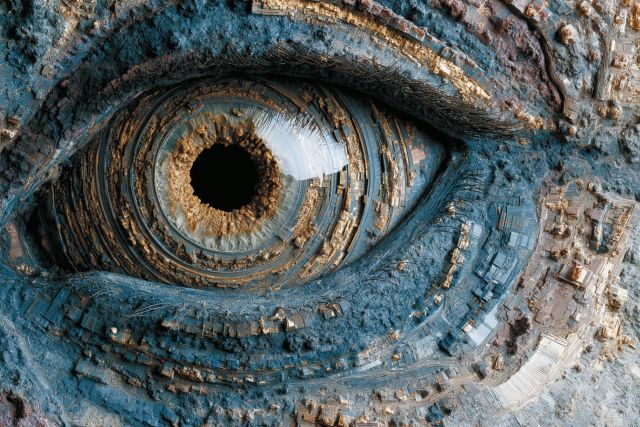
Unveiling the Mysteries of Earth: The Eye of the Sahara Art Print
As you gaze upon this captivating canvas, you are instantly transported to the heart of the Sahara Desert, where the geological marvel known as the Richat Structure resides. The artwork meticulously captures the enigmatic beauty of this natural phenomenon, commonly referred to as "The Eye of the Sahara". Swirling bands of rock and sediment paint a hypnotic spiral that draws you deeper into its core, where shades of gold, azure, and earthen brown intertwine to narrate the Earth's ancient geological tales. This stunning portrayal is not merely a visual delight but a whisper of our planet’s dynamic history, unfolding over millions of years. Divulge in the intricate details as each layer of mineral and stone tells a unique story, inviting you to ponder the forces that sculpted this breathtaking landscape. The contrast between the rugged textures and the precise symmetry of the Eye delivers a visual paradox that challenges the observer’s perception of natural artistry and mathematical precision. This art piece serves as a bridge between the realms of science and art, ideal for those who cherish both. It evokes a sense of wonder and curiosity, urging the viewer to explore beyond the visible and dive into the mysteries that the Earth holds dearly.
*** Placement & Print Options: Enhance the visual appeal of your home or office with this extraordinary art piece available in various formats including canvas prints, fine art prints, and framed prints in custom sizes. The intricate geological patterns and mesmerizing colors make it an ideal addition to spaces such as the study, living room, or office, where it can inspire awe and provoke intellectual curiosity. It’s especially suitable for areas where thoughtful art can stimulate conversation and appreciation for the natural world.
*** About [Richat Structure]: The Richat Structure, better known as the Eye of the Sahara, is a prominent circular geological feature in the Sahara desert of Mauritania. Often visible from space, it spans approximately 40 kilometers in diameter and is thought to have formed from the erosive effects of wind and water on layered sedimentary rock. Once believed to be an impact crater, the Richat Structure is now understood to be a symmetrical uplift that has been exposed through erosion. It is celebrated not only for its striking appearance but also for providing insights into the geological processes that shape our planet.
Image ID: 239767
|

 Canvas Prints
 Fine Art Printing
 Framed Prints
 Plaque Mounting
 Fabric Printing
 Metal & Wood Prints
 Plexi Face Mount
 Print & Dry Mounting
 Cityscape Prints
 Greeting Cards
 Classical Art Prints
 AGP Galleries


 Custom Picture Frames
 Canvas Floaters
 Wood Frames
 Metal Frames
 Canvas Transfer
 Custom Stretcher Frames
 Custom cut MatBoards
 Custom Plexi Cuts
 Custom Size Boards
 Pre-Cut Boards
 Framing Hardware

 Upload Your Photos
 Ideas Gallery
 How it works?
  Artwork Scanning
 Laser Engraving & Cut
 Coffee Mug Prints
 Acrylic Blocks
 T-shirt Prints
 Handmade Oil Paintings
 All Products
 Custom Artist Canvas
 Custom Size Wood Panels
 Canvas Stretching Services
 Resources
 DoveTail Guide
 Aluminum Bars
 Wood Panels
 Stretcher Bars
 Easels & Display
 Resin Coatings
 Cork Rolls/Sheets
 Resin On Canvas
 Price Calculator
 Gift Certificates
 Collages on Canvas
 Word Cloud Design
 Photo Mosaics
 Image Effects
 FAQs
FAQs Pro Accounts
 Artist Gallery Program
 Corporate Art
 Contact KeenART
 Turnaround time
 Shipping
 Rush Orders